Henry appears in Palace of Gold, a documentary film by the Sofsky brothers
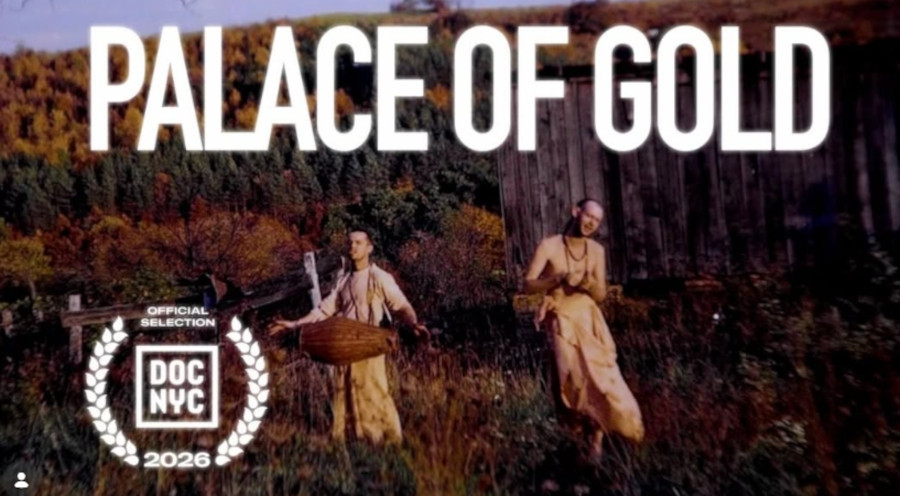
Advertisment for Palace of Gold.
November 14, 2026: The 101-minute documentary film directed by Abhay and Halavah Sofsky, Palace of Gold, premiered at the DOC NYC Film Festival—coincidentally (?) on the 49th anniversary of the death of the Founder/Acharya of ISKCON, His Divine Grace A. C. Bhaktivedanta Swami Prabhupada—at Village East by Angelika. The movie theater was built in 1925-1926 and has hosted Yiddish theatre, off-Broadway stage shows, burlesque, and movies. The theater is a New York City designated landmark, and is also on the National Register of Historic Places.
Abhay and Halavah Sofsky are two sons of Emil “Eddie” Sofsky (Adwaitacharya dasa, ACBSP, initiated July 1974) and Mary Campbell Sofsky (Madri devi dasi, who took diksa from Kirtanananda Swami Bhaktipada on Gaura Purnima, 1979). The boys spent nearly all of their childhood at the New Vrindaban West Virginia Hare Krishna Community. The promotional material for the film explains:
The story of New Vrindaban, a Hare Krishna commune in West Virginia that grew into one of America’s largest cults, has long been sensationalized for its lurid details of crime and internal corruption. But for brothers Abhay and Halavah, it is the world they were born into, and in Palace of Gold, they aim to show a more sensitive, nuanced side of their family’s reality. The sibling filmmakers use humor and an affection for human foibles to chart a path from their parents’ original, lofty goals of spirituality to the problems that beset their community in its self-imposed isolation around a cult of personality. Through many unexpected twists, Abhay and Halavah reveal that the contemporary hunger for American alternatives to community continues to grow. – Jaie Laplante
Henry explained:
This film has been nearly a decade in the making. According to my calendar, I met Halavah and Abhay on April 28, 2017. They had rented an Airbnb house not far from my home in Temecula, California, for our interview. We chatted amicably, and we caught up a bit. When I lived at New Vrindaban they were chidren, so I did not get much association with them, although I knew their father and mother when I lived in the basement of Adwaita’s building for a year-and-a-half at 1025 Manhattan Avenue in Greenpoint, Brooklyn c. 1984-1985. The two brothers ran their cameras for about an hour while they interviewed me about life at New Vrindaban.
As I see it, the film is a family film. Although there is much New Vrindaban (and some ISKCON) history presented, it’s basically about one family who lived at New Vrindaban: the Sofsky family. Adwaita appears in the film almost constantly. The Sofksy brothers told me they interviewed their father for about one hundred hours. Adwaita’s wife Madri also appears frequently. The directors, Abhay and Halavah appear briefly, along with their two older half brothers, Ananta and Chutie, who speak about their childhood (often traumatic) at the commune.
Others appear who were also children in the 1970s and 80s, such as Chaits, Rich Sarti, Bhima Karma Saragrah and Laksmi. Today they are in their 40s and 50s. Laksmi’s parents, Sudhanu and Lajjavati also appear in the film. Also interviewed were current and former New Vrindaban residents: Madhava Ghosh, and Nityodita, and Tapahpunja, and Sukhavaha and Jamuna, and Kanka. As I recall, only one non-devotee appears in the film, Karmi Kelly, who was a thirteen-year-old local Marshall County neighbor in the early 1980s.
I am pleased that I had a small part in this wonderful film. I appear about a dozen times, sometimes exuberant, sometimes sad, and at least once in a humorous mood when for a few seconds I could not remember one of the four regulative principles.
When I watched this movie for the first time, I was totally impressed. I felt it was the most-balanced of all the films I have seen about the Hare Krishnas. The directors presented a complicated story with care and dignity. I felt that Adwaita (the father of the two directors) was the hero of the film, but perhaps I should say hero-villain. The film portrayed a story about pain and joy, abuse and kindness, suffering and healing. I felt the movie had an optimistic and happy ending.
On the other hand, perhaps my vision is colored by my own mostly-favorable memories of living at New Vrindaban and serving Swami Bhaktipada. Upon reflection, I have since realized the film has one very big and significant flaw: it implies that Kirtanananda Swami Bhaktipada’s troubles—deviations, sexual misconduct and erratic behavior (and the consequent troubles of the New Vrindaban Community)—began AFTER the murder attempt when Bhaktipada’s skull was cracked by a mentally unbalanced devotee.
This was the attack on October 27, 1985 by Triyogi dasa ACBSP (Michael Shockman). Bhaktipada was ten days in a coma and three weeks in the hospital, and when he returned to New Vrindaban in November, he was not the same person. He suffered some brain damage which made him forgetful, and he also lost much of his self control and inhibitions.
This film presents Swami Bhaktipada, prior to October 1985, as a virtuous, self-controlled, holy man, and that is not true. Swami Bhaktipada began fondling boys at New Vrindaban years before October 1985. A woman from Columbus, Ohio told me that in 1979 her seven year old son at the New Vrindaban gurukula (boarding school) proudly explained to her, “Kirtanananda Maharaja fondled my genitals!”
Yes, after Swami Bhaktipada’s head injury, things went downhill quickly, until he was finally evicted nine years later in 1994. But his deviations prior to October 1985 were kept hidden, at least they were hidden it seems from most of the devotees who were interviewed for this film. Anyone who watches this film who is not familiar with the intricate details of New Vrindaban history might erroneously conclude that trouble in paradise began AFTER the October 27, 1985 attack.
In addition, the only people who grew up as children at New Vrindaban who were interviewed are those who have made peace with their traumatic past and are able to visit the community without experiencing post traumatic stress. There are many, many men and women who were children at New Vrindaban today who harbor intense hatred of the place and the people in their past who abused them. They would not be so favorable if they were interviewed for this film.
Nonetheless, the film paints a great picture of what a special place New Vrindaban was, and is, to many, in spite of all the craziness.
To watch Palace of Gold, go to: DOC NYC Film Festival 2026 and click on “Purchase Tickets.”
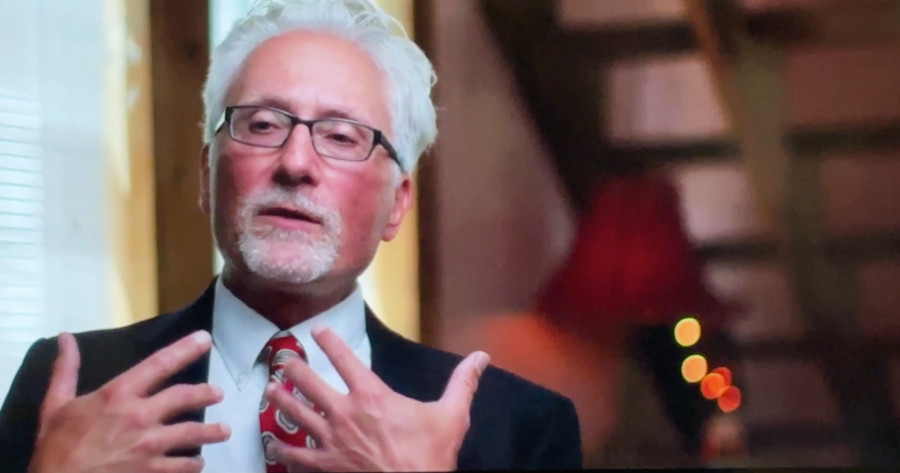
“We were happy to perform austerities to build Prabhupada a palace. We felt we were part of something really big.”
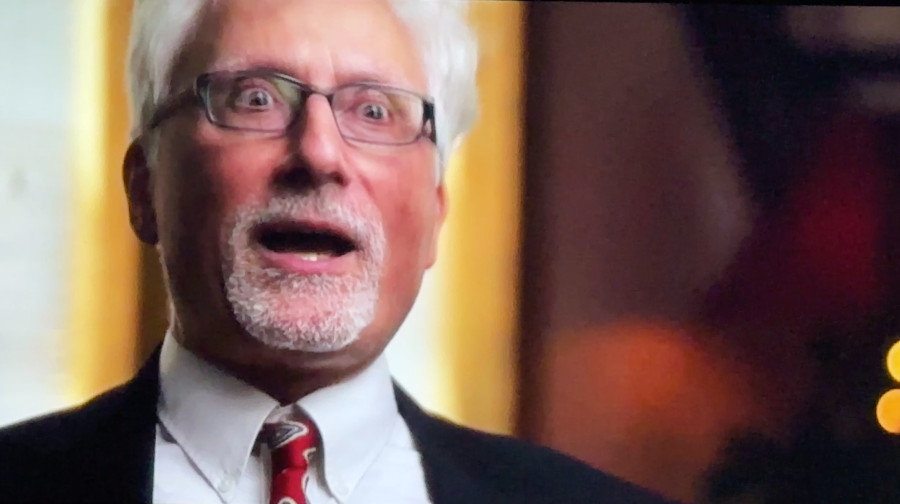
“I was sitting in Bhaktipada’s office one time when Adwaita comes in and puts a suitcase on Bhaktipada’s desk. Bhaktipada opens the suitcase for a split second, then shuts it. His eyes get big, because of all the cash in the suitcase, perhaps tens of thousands of dollars.”
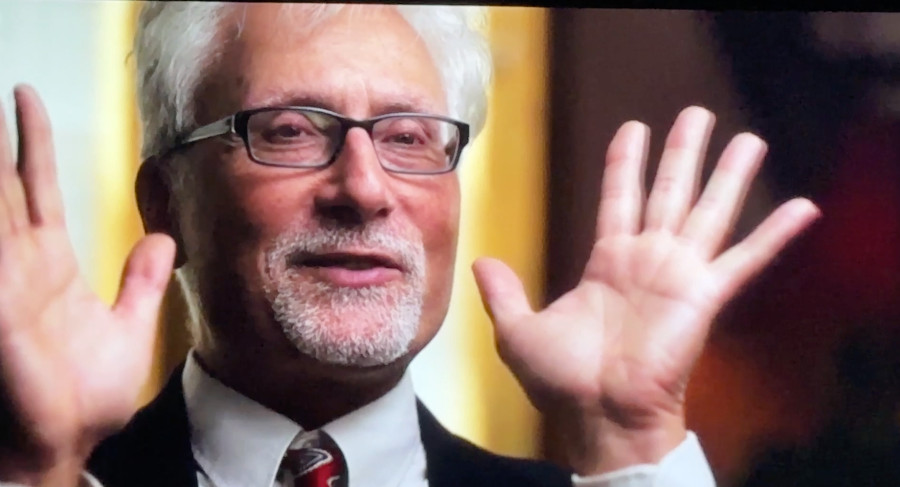
“Bhaktipada has a big grin on his face, due to Adwaita’s suitcase full of cash.”
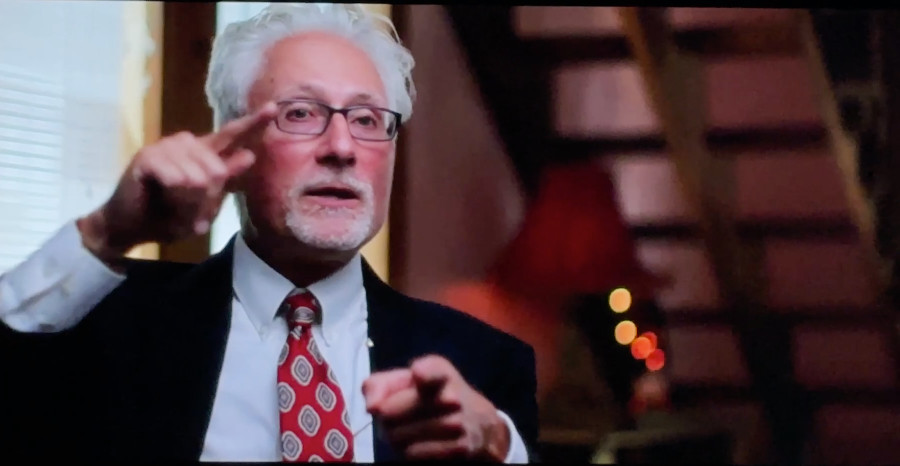
“If the region in your brain for love is activated, the region in your brain for critical thinking, for judgement, is deactivated.”
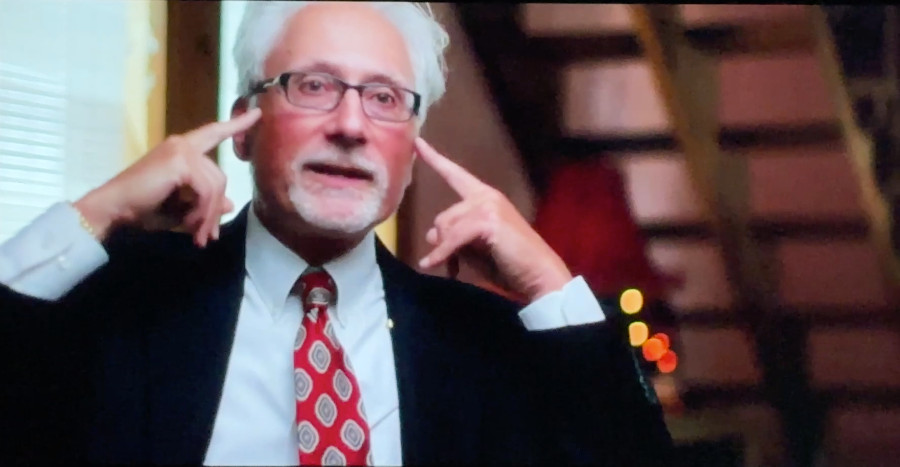
“If you love, you can’t see what anyone with a little bit of brains can see: the guy’s a pretender! He’s a cheater!”
Video clips
Kirtanananda dasa Brahmachari speaks (1966).
The New Vrindaban Krishnas are like the Green Berets of spiritual movements.
We sacrificed to build Prabhupada a palace.
| Back to: Gold, Guns and God, Vol. 4 |